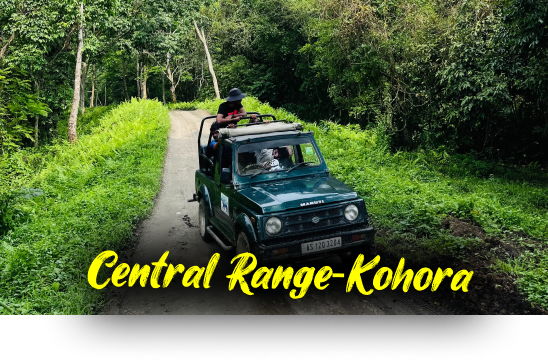
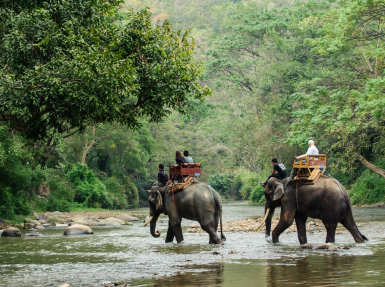
The entry gate to the Central or Kaziranga Range of the Kaziranga National Park is located in Mihimukh area of Kohora town. It lies between Western and Eastern Range which covers the Daglang and Foliomari area. The Central Range safari is the most popular choice of jeep safari and has a well-marked 28 km trail which took about 2 hours. The safari offers some spectacular sighting of the grazing Rhinos or wallowing in the large grassland, herds of elephants and many other species of the wild flora and fauna of this tourism zone. Jeep Safari and Elephant Safari are conducted here in the morning and evening during season i.e. from November to April.
The safaris in Kaziranga are organized by the Forest Department during season. To visit Kaziranga Central Range, permission needs to be obtained from the Kohora Tourism Office.
The history of Western Range Bagori can be traced back to 1980 when Shri T Das, Forest Ranger was appointed as the Range officer of a newly established Forest Range. In the earlier period, it was a beat office under the Kaziranga Range in the Eastern Assam wildlife division. It shares its boundaries in the North with the central range of BWLD, in the South Mori Diffalu river and Deopani Bridge NH 37, in the East with Kaziranga Range, and in the West with Burapahar Range. However, the 4th addition area of the range falls on the Southern side of NH 37 in Maloni Grant and extends up to Silimkhowa village on the North. Towards its East is the Kanchanjuri TE and on the West Burapahar TE. Recently on 2nd September 2020, another area of 307 has been added at Bandardubi as the 8th addition of Kaziranga National Park which forms part of this Range. The Range has 40 Anti-poaching camps, 2 Beat offices, and 1 Sub beat office.
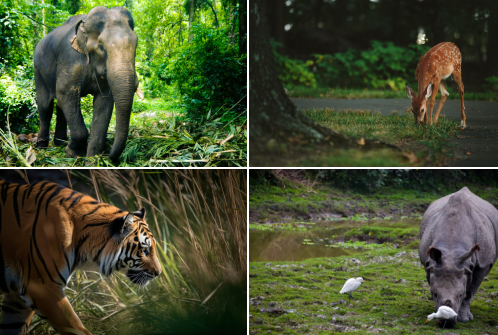
The Range encompasses various ecosystems, including dense forests, grasslands, and wetlands. Some of the most notable wildlife species found in this region include the Indian one-horned rhinoceros, Bengal tigers, Asian elephants, and numerous species of deer, birds, and reptiles.
Interesting Places to Explore
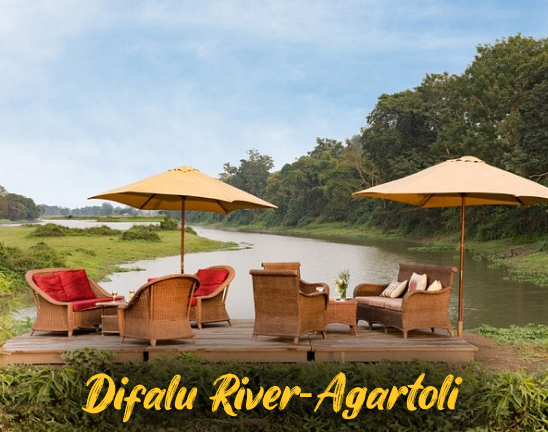
The entry gate to the Eastern Range of the Kaziranga National Park is located in Agoratoli area, which is approximately 2 km from Kohora. The Eastern Range is situated on the eastern edge of the park and is known for its diverse vegetation, which includes tall elephant grass, marshland, and tropical moist deciduous forest. The range is bisected by the Difalu River, which provides water for the wildlife and vegetation in the area.
The Eastern Range offers a well-marked 15 km jeep safari trail, which takes approximately 1.5 to 2 hours to complete. The safari offers a unique experience with sightings of various wildlife species, including the Indian one-horned rhinoceros, tigers, elephants, water buffaloes, and various species of birds and reptiles. Like the Central Range, the safaris in the Eastern Range are also organized by the Forest Department during the season. To visit the Eastern Range, visitors need to obtain permission from the Agoratoli Tourism Office.
A maximum of 40 vehicles are allowed to travel into the Eastern Range during the morning and same number of vehicles are allowed in the evening hours.
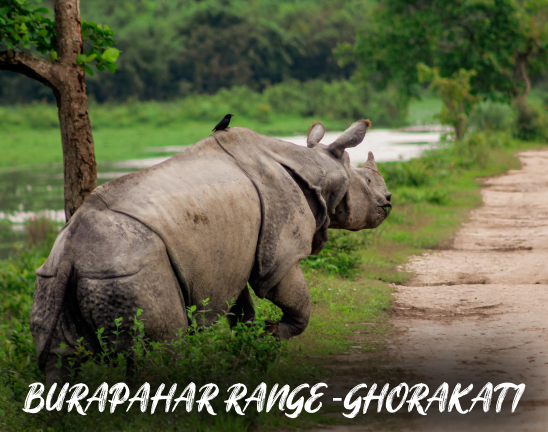
The range covers an area of approximately 44 square kilometers and is known for its hilly terrain and dense forests. The range is situated on the western edge of the park and is home to a significant population of the Indian one-horned rhinoceros, tigers, elephants, and other wildlife species. The Ghorakati area is located in the Burapahar Range and is known for its breathtaking scenery and diverse flora and fauna.
The Ghorakati jeep safari trail is approximately 24 km long and takes about 3 to 4 hours to complete. The trail offers a unique experience with sightings of various wildlife species, including the Indian one-horned rhinoceros, tigers, elephants, water buffaloes, and various species of birds and reptiles.
To visit the Ghorakati area of the Burapahar Range, visitors need to obtain permission from the Bagori Tourism Office, which is located near the main entrance of the Kaziranga National Park. The Ghorakati jeep safari is conducted in the morning and afternoon during the season, which runs from November to April.
Kaziranga National Park is a gift of nature to mankind, and a must see for everyone. Kaziranga offers you experience of the wild which is unique and becomes a part of your lifetime memory. You can enjoy the beauty of the Greater One Horned Rhinoceros with its majestic body and its charismatic horn, see herd of elephants and some most magnificent tuskers (if you are lucky!). You are sure to come across herds of Wild Buffalo with their magnificent horns. These are some of the last populations in the wild. You would also come across herds of Hog Deer, Sambar and Swamp Deer.
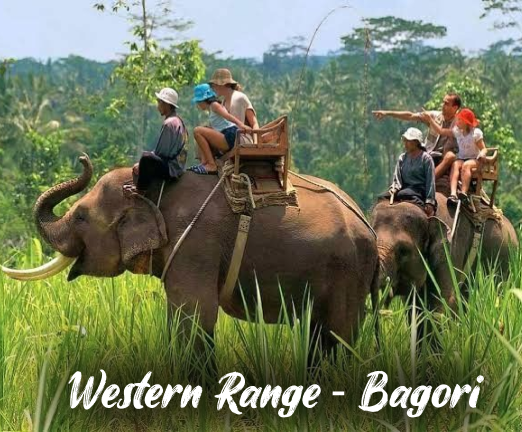
Elephant Safari is available only in the early Morning session (timings 5:30 AM to 7:30 AM). The safari is typically for an hour only. Tickets for the Safari, currently, need to be obtained the previous night from Kohora Range on payment of requisite fee. There are two Elephant Safari points in the Kaziranga National Park, one at Mihimukh in the Central (Kohora) Range and another at Bagori in the Western Range. At Bagori, the elephants belong to private owners who have been permitted to carry tourists on trained elephants.
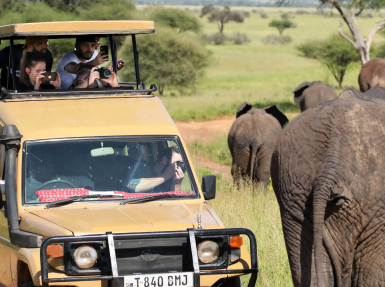
Each of these circuits take about one and half to two and half hours (or even more depending upon interest of the tourists). No private vehicles are permitted inside the Park. The tourists need to hire authorized Jeep Safari Maruti Gypsy vehicles from the Jeep Safari Associations at Kohora and Bagori. These associations are run by the local unemployed youth of the villages on the fringe of the Park. All such vehicles entering the park must have valid registration with the Park authorities. Jeep Safari is a regulated activity, and vehicles are permitted only from 7.30 AM to 3.00 PM (or dusk) within the Park. Other than at the identified landing points (which are typically not more than one or two in each of the tourist circuits)
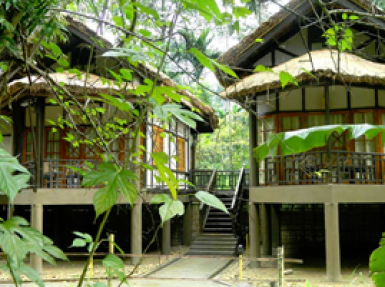
The Kaziranga Tiger Reserve has a few Forest IB (Inspection Bungalow) and Guest Houses which are primarily meant for forest officers accommodation. Subject to vacancies, the available accommodation may be offered to others visiting the Kaziranga Tiger Reserve. The proceeds of the room rents go to the Kaziranga Tiger Conservation Foundation (KTCF), and the Linen Charges go to the Kaziranga National Park Staff Welfare Society (KNPSWS), both of which are registered entities of the Park Management. the KTCF is a registered society established under section 38X of the Wildlife (Protection) Act, 1972 under a notification of the Government of Assam. please visit KTCF pages for more information.